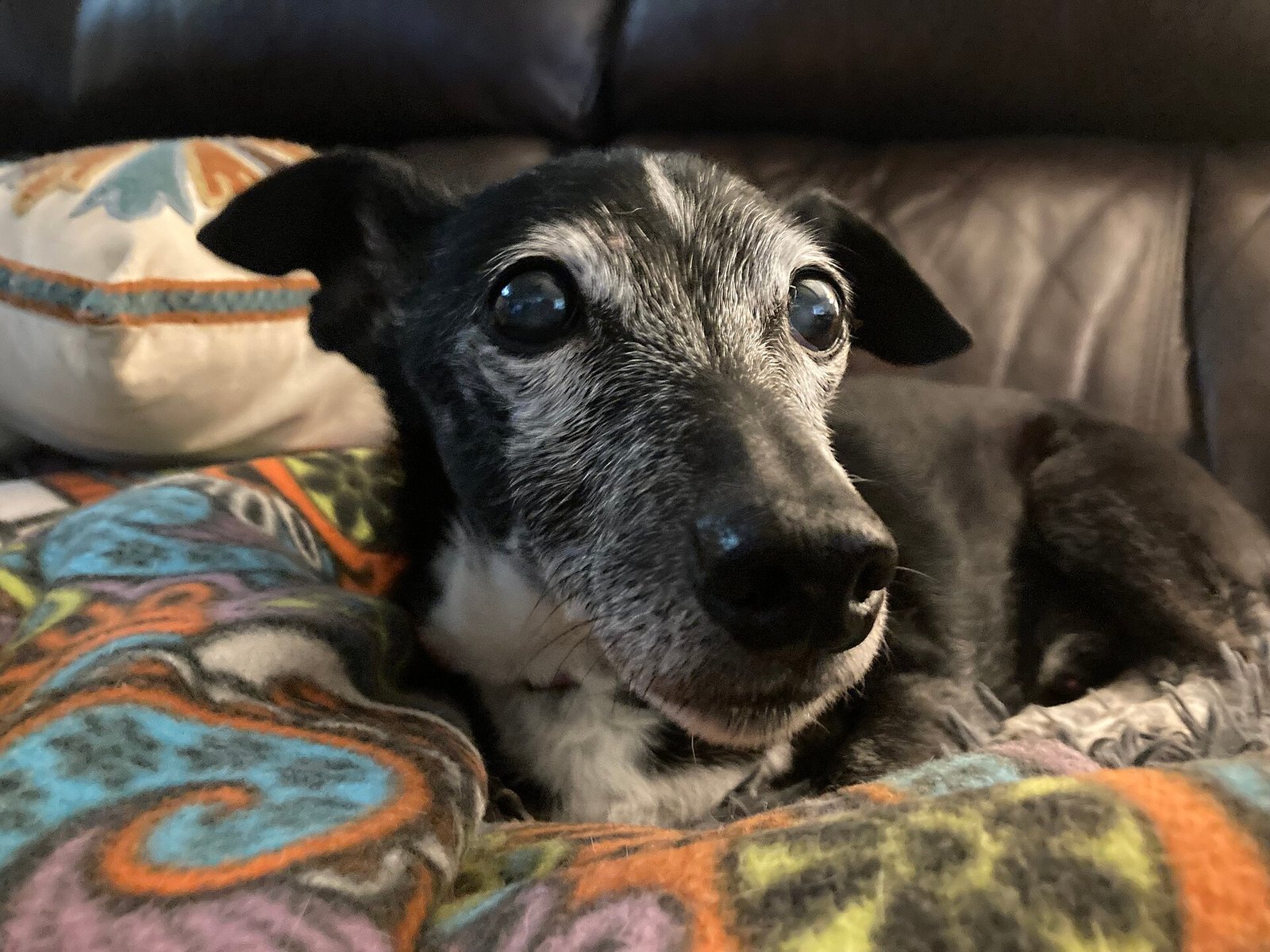
Dogs age faster than we do, and the senior years can sneak up quickly. A dog who was bounding up the stairs last year may now hesitate at the bottom step. With a few adjustments and closer attention to health, senior dogs can stay comfortable, happy and engaged for years.
When is a dog considered a senior?
It depends on size. Giant breeds such as Great Danes may be considered seniors at around five or six years old. Medium and large dogs often reach senior status around seven or eight, while many small breeds are not considered seniors until nine or ten. Your vet can tell you when your dog has entered this stage.
Common signs of aging
- Graying around the muzzle and eyes
- Sleeping more and slowing down on walks
- Stiffness when getting up, especially after rest
- Reluctance to jump into the car or onto furniture
- Cloudy-looking eyes or reduced hearing
- Weight changes, either gain or loss
- Changes in behavior, such as confusion, restlessness at night or forgetting house training
Some of these are a normal part of aging, but many can also be signs of treatable conditions. Do not assume a change is “just old age” without checking with your vet.
Health problems that become more common
- Arthritis. One of the most common causes of reduced activity in older dogs. Many dogs hide joint pain well.
- Dental disease. Infected teeth can cause pain and affect appetite.
- Kidney disease. Often shows up as increased thirst and urination.
- Hormonal conditions such as hypothyroidism and Cushing’s disease.
- Diabetes. Signs include drinking and urinating more, increased appetite and weight loss.
- Heart disease. Coughing, tiring easily or faster breathing at rest can be signs.
- Lumps and cancer. Any new or changing lump should be checked.
- Cognitive dysfunction. Similar in some ways to dementia in people, it can cause disorientation, changes in sleep patterns and new accidents in the house.
Vet visits every six months
Many veterinarians recommend checkups twice a year for senior dogs. These visits often include blood and urine tests, a blood pressure check and a careful look at weight, joints, teeth and any lumps. Finding problems early usually means more treatment options and better comfort for your dog.
Keeping a senior dog comfortable at home
Make the home easier to navigate
- Add rugs or non-slip runners on slippery floors.
- Use ramps or pet steps for the car, bed or couch.
- Raise food and water bowls slightly if bending down seems uncomfortable.
- Provide a thick, supportive orthopedic bed in a warm, draft-free spot.
- Use night lights if your dog seems unsure in the dark.
Keep them moving, gently
Regular, moderate exercise helps maintain muscle, joint mobility and a healthy weight. Shorter, more frequent walks often work better than one long outing. Swimming can be excellent for dogs with arthritis, if they enjoy it and are supervised.
Adjust the diet
Older dogs often need fewer calories, but some lose weight and need more. Your vet can help you decide whether a senior formula or a diet for a specific condition makes sense. Keeping a senior dog lean is one of the best things you can do for their joints.
Keep the mind active
Puzzle feeders, sniffing games, short training sessions and new walking routes help keep an older dog’s brain engaged. Mental stimulation may help slow cognitive decline.
Be patient with changes
Senior dogs may need more frequent bathroom breaks, may not hear you call and may take longer to settle. Gentle routines and a calm environment help them feel secure.
Managing pain
Signs of pain in older dogs can be subtle: panting at rest, restlessness, licking a joint, reluctance to be touched or simply doing less. If you suspect pain, see your vet. There are safe and effective pain treatments for dogs. Never give human pain medications such as ibuprofen, naproxen or acetaminophen unless your vet specifically tells you to, as these can be very dangerous for dogs.
Quality of life
As dogs reach their final years, it helps to think regularly about their quality of life: Are they eating, comfortable, able to move and still enjoying things they love? Your veterinarian can help you assess this honestly and talk through options when the time comes.
This article is for general information only. Talk to your veterinarian about the best care plan for your senior dog.